Why Flight Schools Need Professional Aircraft Detailing Services
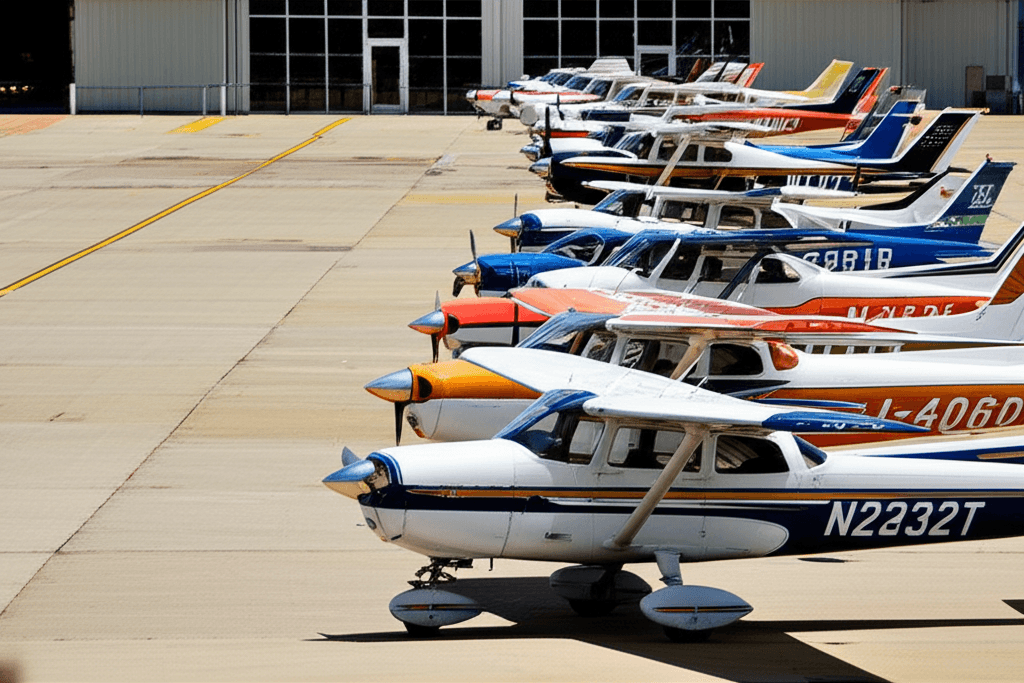
Flight school aircraft work harder than almost any other planes in general aviation. Touch and goes, student landings, multiple flights per day. That kind of utilization demands equally serious maintenance, and professional detailing is part of the equation.
The Reality of Training Aircraft
A busy flight school puts 800-1,200 hours per year on each trainer. Compare that to the average privately owned Cessna 172 flying 50-100 hours annually. Training aircraft see ten times the use and ten times the wear.
- Bug contamination on leading edges
- Exhaust residue on belly and tail
- Brake dust around gear
- Interior soil from multiple students daily
- Fluid drips and stains from frequent engine starts
Without regular professional cleaning, this contamination compounds. What starts as surface dirt becomes bonded contamination that damages paint, corrodes metal, and degrades interior materials.
FAA Compliance Considerations
Aircraft used for flight instruction for hire require inspections every 100 hours under FAR Part 91.409. Many schools use progressive inspection programs with 25-hour phases to minimize aircraft downtime.
Here's what many operators don't realize: cleaning and waxing are explicitly listed as FAA-approved preventive maintenance items in FAR Part 43, Appendix A. While detailing alone doesn't satisfy inspection requirements, it directly supports compliance in several ways.
Inspection Preparation
A clean aircraft is easier to inspect. Mechanics spot cracks, corrosion, and damage more readily on clean surfaces. Dirty aircraft hide problems. We've had A&P mechanics tell us they found issues during details that weren't caught in previous inspections because grime concealed them.
Corrosion Prevention
Corrosion is a constant battle for training aircraft. They fly frequently, often sit outside between flights, and operate from airports where salt, agricultural chemicals, or industrial pollution accelerate metal degradation.
Professional detailing removes corrosive contaminants before they cause damage. Regular waxing provides a barrier against moisture and environmental attack. This isn't cosmetic work. It's preservation.
Logbook Documentation
We provide detailed documentation of every service. This creates a maintenance record showing consistent care throughout the aircraft's life. When it's time to sell or trade training aircraft, that documentation supports higher valuations.
The Business Case for Fleet Detailing
Flight school operators watch every dollar. Professional detailing costs money. Here's why it makes financial sense anyway.
Extended Paint and Interior Life
Repainting a Cessna 172 costs $8,000-15,000. Replacing worn interior components runs $3,000-8,000. Regular detailing extends the interval between these major expenses by years.
A $400 quarterly detail that adds two years to your paint life? That's a massive return on investment.
Reduced Maintenance Discoveries
Clean aircraft have fewer squawks during inspections. When mechanics can see every surface clearly, they either find nothing (good news) or catch small issues before they become big ones (also good news).
Dirty aircraft lead to "we need to clean this area to properly inspect it" findings. That adds labor time to every inspection.
Student and Customer Perception
First impressions matter. Prospective students choosing between flight schools notice aircraft condition. A fleet of clean, well-maintained trainers signals professionalism and attention to detail.
Parents writing tuition checks notice too. Clean aircraft provide reassurance that the school takes safety and maintenance seriously.
Instructor Retention
Flight instructors spend all day in these aircraft. Working in clean, fresh-smelling planes improves job satisfaction. It's a small thing, but in a competitive market for CFIs, every advantage helps.
Fleet Detailing Programs
Individual aircraft details don't work well for flight schools. The scheduling is complicated, and costs add up unpredictably. We offer fleet programs designed for training operations.
Scheduled Rotation
We work with your dispatch to rotate aircraft through detailing with minimal impact on training schedules. One aircraft detailed while another flies. No fleet downtime.
Consistent Pricing
Monthly or quarterly flat-rate pricing simplifies budgeting. You know exactly what aircraft care costs, regardless of how many hours you fly.
Priority Response
Spills, incidents, and surprise inspections happen. Fleet customers get priority scheduling for urgent needs. When a student gets sick in N12345 and you need it flying tomorrow, we make it happen.
Customized Service Levels
Training aircraft don't need the same detailing as charter aircraft. We tailor service levels to match training operations. Focus resources where they matter most.
What Fleet Detailing Includes
Our flight school program covers:
- Full wash and contamination removal
- Bug and exhaust stain treatment
- Leading edge cleaning and protection
- Wheel and gear leg cleaning
- Window clarity maintenance
- Thorough vacuum including under seats
- Wipe-down of all surfaces
- Instrument panel and control cleaning
- Seat cleaning and conditioning
- Carpet spot treatment
- Odor elimination
- Pre-inspection cleaning when scheduled
- Documentation photos for records
- Issue identification and reporting
Airports We Serve
Many flight schools operate from airports we already serve:
View all 15 airports in our service area.
Getting Started
If you operate a Part 61 or Part 141 flight school, we'd like to discuss how professional detailing fits your operation. Contact us to schedule a fleet assessment. We'll visit your facility, evaluate your aircraft, and propose a program that makes sense for your specific situation.
No obligation, no pressure. Just information to help you make the right decision for your flight training organization.
Keep your trainers flying. Keep them looking good. Keep your students safe.